How to Take Care of Your Oral Health at Home with Implant-Supported Dentures
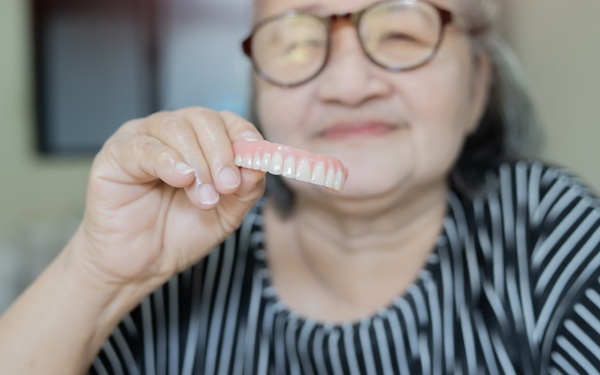
Implant-supported dentures can restore comfortable chewing and a stable smile, but they still require consistent home care to protect the gums, implants, and surrounding tissues. Unlike natural teeth, dental implants cannot develop cavities, but plaque and bacteria can still build up around them. Without proper cleaning, inflammation may develop around the gums and threaten the tissues that support the implants. A simple daily routine can help patients maintain both their restorations and long-term oral health. Read on to learn how to properly care for dentures and overall oral health at home.
Clean implant-supported dentures every day
Daily brushing removes food particles and plaque from the denture and around the implant sites. Patients should use a soft-bristled toothbrush or another cleaning tool their dentist recommends. Gentle brushing helps clean the restoration without scratching its surface or irritating the gums.
Patients should pay close attention to the area where implant-supported dentures meet the gumline. Food and bacteria can collect in small spaces around the restoration, especially underneath fixed dentures. Thoroughly cleaning these areas helps reduce irritation, bad breath, and gum inflammation.
Clean underneath and around the implants
A regular toothbrush may not reach every area around an implant-supported restoration. Dentists may recommend additional tools to clean spaces beneath the denture and around individual implant posts. Helpful options may include:
- Interdental brushes designed for small spaces
- Floss threaders or specialty implant floss
- Water flossers used according to dental instructions
- Soft picks for cleaning along the gumline
Patients should use these tools gently to avoid injuring the surrounding tissues. A dentist or dental hygienist can demonstrate the correct technique based on the design of the implant-supported dentures.
Protect the gums and supporting tissues
Healthy gums play an important role in keeping dental implants stable. Redness, swelling, tenderness, or bleeding around an implant can indicate inflammation and deserves prompt attention. Patients should also watch for persistent bad breath, unusual discomfort, or changes in how the restoration feels. Smoking and tobacco use can also interfere with gum health and healing. A balanced diet, adequate hydration, and consistent oral hygiene can help keep the tissues around the implants healthy.
Avoid habits that can damage the restoration
Although implant-supported dentures provide strong chewing support, they are not designed for chewing ice, biting pens, opening packages, or cracking hard foods. These habits can damage the denture teeth or place unnecessary stress on the implants.
Patients who grind or clench their teeth may need a custom nightguard. Protecting the restoration from excessive pressure can reduce wear and help maintain a comfortable bite.
Maintain a healthy smile at home
Daily cleaning plays a major role in protecting implant-supported dentures and the tissues that support them. Brushing, cleaning underneath the restoration, monitoring the gums, and avoiding damaging habits can help preserve comfort and function. Regular dental appointments also allow the dental team to professionally clean difficult areas and check the implants for changes. For more information or to schedule an appointment, call our office.
Request an appointment here: https://www.downtownsmilecenter.com or call Downtown Smile Center at (805) 775-8725 for an appointment in our Oxnard office.
Check out what others are saying about our dental services on Yelp: Implant Supported Dentures in Oxnard, CA.
Related Posts
Dental fillings protect teeth affected by cavities or minor damage, but they do not last forever. Over time, normal chewing forces, temperature changes, and everyday wear can affect even well-placed restorations. Visiting a general dentist can help identify the early signs of a failing filling, allowing treatment before a small problem develops into a larger…
Many individuals ask cosmetic dentists whether at-home whitening can deliver noticeable results for their smile. While the answer is yes under certain conditions, effectiveness depends on the method used, the type of stain, and the consistency of treatment. Not all over-the-counter choices provide the same level of safety, comfort, or long-term success when you want…
Effective gum disease prevention starts with the right tools, and a deep-cleaning toothbrush helps you keep your gums healthy and free of gum disease. Many people assume that any toothbrush will work for their oral health needs. However, the specific design of the bristles makes a massive difference in the fight against gum disease and…
A general dentist often recommends a toothbrush that matches a patient’s age, dexterity, and oral health needs. At-home brushing matters because it removes plaque, a sticky film of bacteria that collects on teeth and along the gumline. The right brush can make daily care easier, more consistent, and more effective for both children and adults.Many…